
Winter driving and recovery
Car Stuck on an Icy Driveway? When to Stop and Call for Recovery
By Baba Vehicle Recovery ·
Your car starts, but the wheels spin as soon as you try to leave the driveway. The main road may have been gritted while the slope outside your house and the first bend on your street are still icy. If the wheels keep spinning or the car starts to slide, stop trying to force it out. If it’s safely parked and the journey can wait, leave it there.
Check the first stretch of your journey before setting off
Check the pavement crossing, the bottom of the driveway and the first junction on your route. A treated main road may still be hard to reach from an untreated side street. Check the forecast and local warnings, and delay travel in snow or ice unless the journey is essential. If you need to travel, clear the windows and mirrors, demist the glass, check your lights and number plates, and remove loose snow that could fall into the path of other road users.
Highway Code rules 228–231 · Met Office advice on travelling in snow and ice
What to do if your car wheels spin on ice
Ease off the accelerator. If you’re still in control of the vehicle, stop and reassess. Think about where the car could go if it slid again. A driveway that ends at a pavement or in moving traffic leaves little room for another attempt. Keep people away from the direction the vehicle could slide.
- The car is safely parked. Leave it where it is if the journey can wait. Reassess when conditions improve.
- The wheels keep spinning or the car has already slid. Stop trying to move it and ask for a recovery assessment if it needs to be moved.
- A wheel has dropped into a verge, rut or ditch. Tell the operator which wheel is off the firm surface and whether the vehicle is tilted.
- The vehicle is in moving traffic and you cannot reach safety. Put your hazard lights on if you can, call 999 and follow the emergency operator’s instructions.
Highway Code guidance on breakdowns and places of relative safety
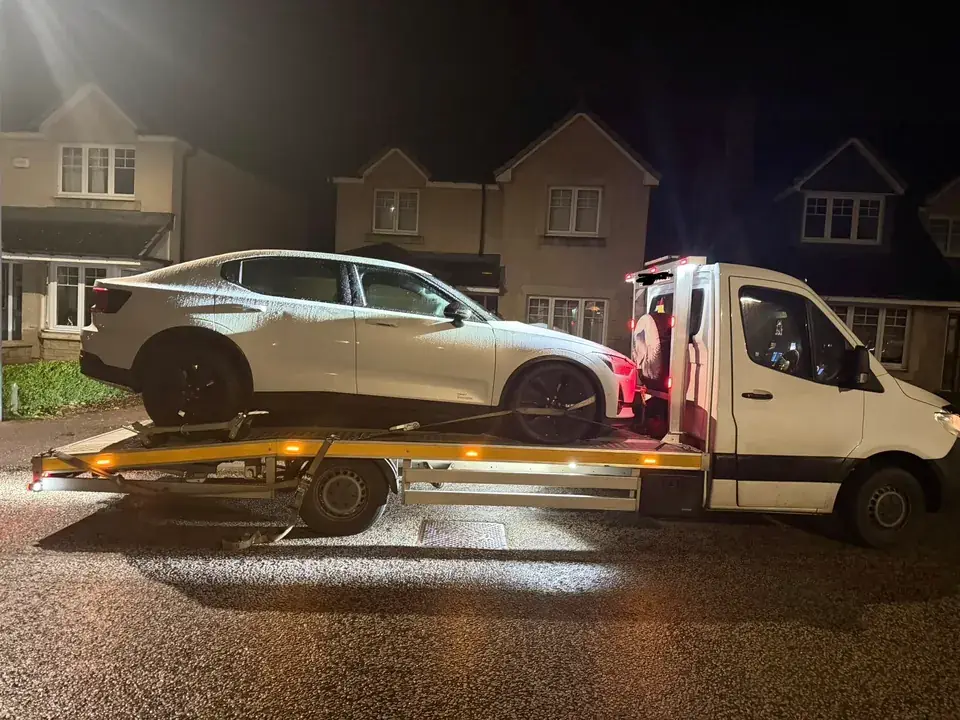
What to send Baba Vehicle Recovery for a quote
A wide photo of the driveway can tell us more than a close-up of a tyre. We need to see where the truck could approach and where the car could be moved to. Parked vehicles, a tight gate or an icy bend can affect the recovery options even when the vehicle itself is undamaged.
- Pickup postcode and exact position. Say whether the vehicle is on the driveway, across the pavement or partly in the road.
- Make, model and gearbox. Tell us whether it’s a car or van and if the engine starts.
- Vehicle condition. Share what you already know about whether it rolls, steers or releases the parking brake, and whether any wheel has slipped off the drive. Leave the vehicle where it is while you make the enquiry.
- Photos or a short video of the slope and truck access. Only take them if you can stay clear of traffic and the vehicle’s possible path.
- Destination. Say whether you need the vehicle moved to a safe spot nearby or transported to a garage or another address.
Can a recovery truck get a car off a steep, icy driveway?
It depends on the surface, the angle of the vehicle and whether the truck can reach a safe working position. A straight driveway with space to work is a different job from a slope ending at a blind bend. Baba Vehicle Recovery can use the information you send to assess whether a controlled pull-out is suitable and whether you’ll need onward transport.
Ditch, mud and grass verge recovery · Car and van breakdown recovery
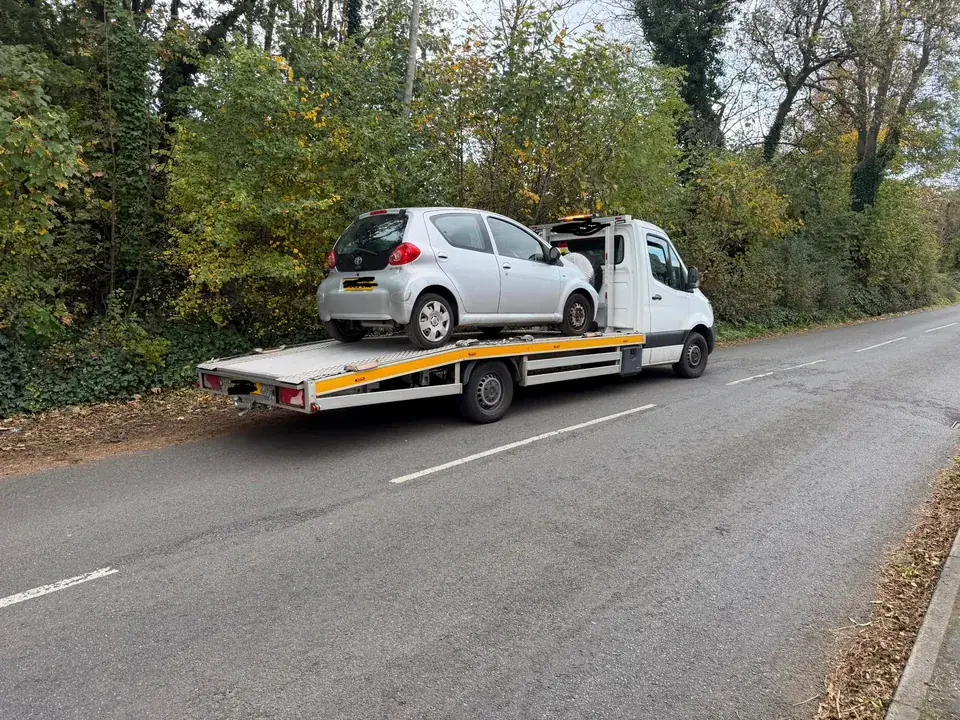
What if your car won’t start after an overnight freeze?
If the car is safely parked and the engine won’t start, describe what happens when you turn the key or press the start button. A suspected flat battery may be a jump-start job. Mention any visible damage, a vehicle that has slid, or the need for transport to a garage so the team can assess the right service.